Google Ranked the Page They Didn't Want
Midland wanted its AI Native SIEM product page to rank. Google surfaced the educational article first, which turned one supposedly wrong URL into a clean lesson about intent.
Google ranked the article because AI Native SIEM is a learning query before it is a buying query. The product page asked for a transaction while the searcher was still trying to understand the category.
The Meeting Was Supposed to Be About Something Else
I had a Microsoft Teams meeting with Midland Information Systems to get Claude Desktop and Codex Desktop running on a locked-down machine.
The firewall and their SSH conventions won the first round. Their technology team is sorting that out.
Before the call ended, the conversation turned to a Google result that made even less sense to them.
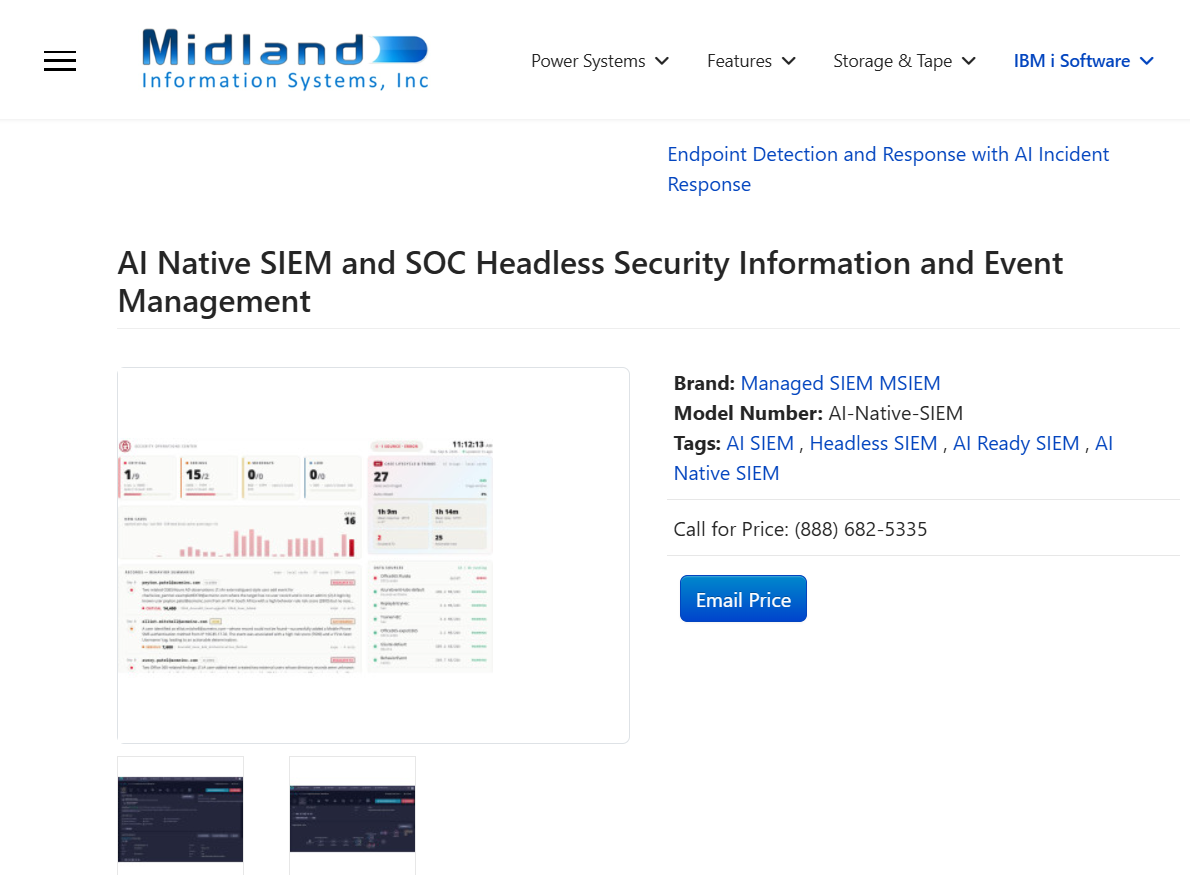
Midland had published a new product page for AI Native SIEM. That was the page they wanted to rank.
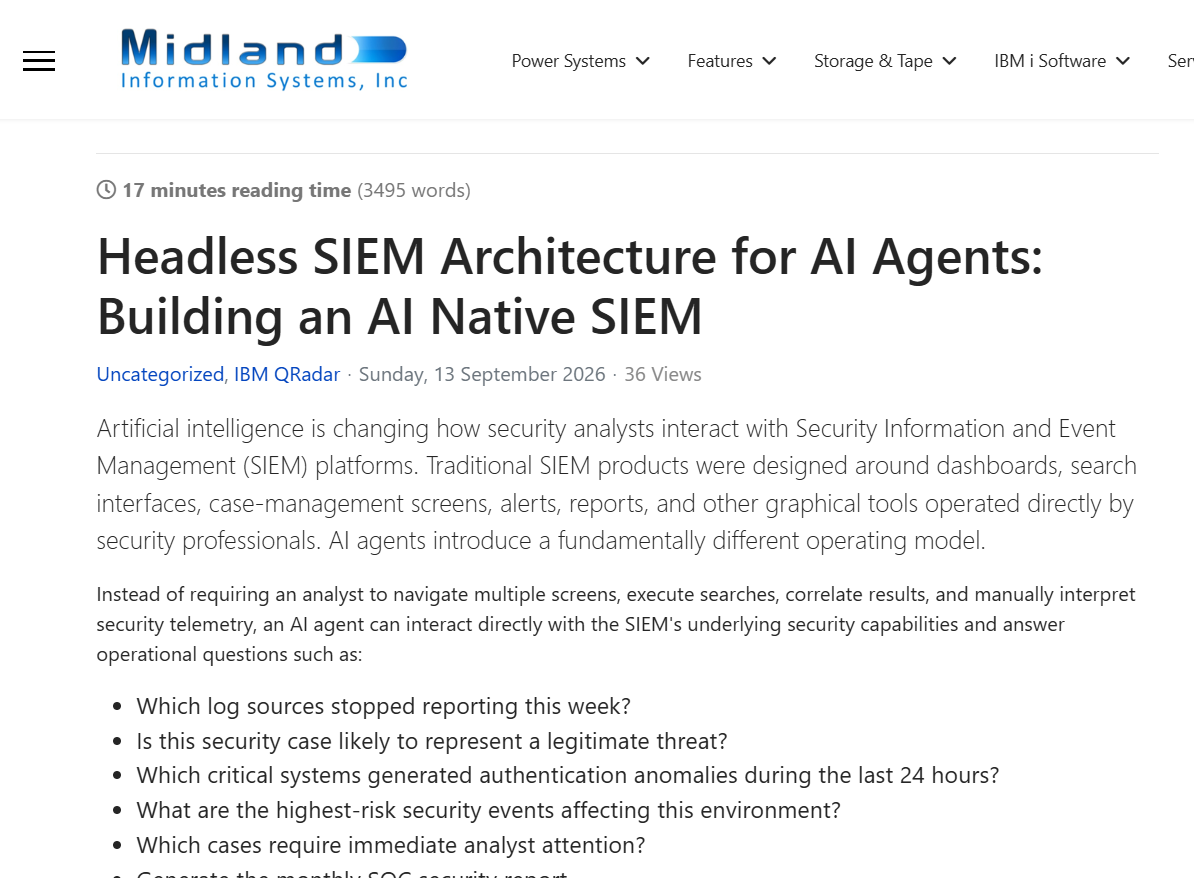
Instead, a new EasyBlog article appeared on Google's first page for AI Native SIEM, and the product page could not be found.
They thought Google had picked the wrong page.
It Wasn't the Wrong Page
My email back started with one word: intent.
Somebody searching only AI Native SIEM has not shown buying intent yet. There is no price, cost, demo, provider, quote, or buy language in the query.
They are probably trying to learn what the term means, whether it is different from a traditional SIEM, and whether AI native is a real structural difference or this month's label.
The article answers those questions.
The product page says Call for Price and Email Price. That is useful after the reader accepts the category and wants an offer. It is early when the reader is still defining the thing.
What I Got Right, and What I Would Tighten
The intent explanation holds.
The part I would tighten is the temptation to say a fresh article from a topical authority will always beat a shopping page for a new term.
Always is doing too much work there.
Freshness probably helped. Midland published the article on September 13, 2026 around a term the security market is still defining. The article is substantial. The domain already has history in managed security and enterprise technology.
But relevance, authority, indexing, internal links, content depth, competition, personalization, and the changing result set all matter. A page-one result reported during one live search is a receipt for what happened. It is not a permanent law.
The Product Page Did Not Lose
This is the part technology companies get backward.
The article ranking does not mean the product page failed. It means the two pages belong at different moments.
The article earns the first conversation. The product page handles the later commercial one.
Trying to make the product page answer the broad educational query can weaken its real job. Turning the article into a wall of quote buttons can weaken the reason it earned visibility.
The useful move is to connect them. Let the article teach. Give the reader a natural comparison or product next step. Let the product page confirm the offer and make contact easy.
Then the BigTech Reseller Thesis Clicked Into Place
This accidental ranking is almost a perfect live demonstration of why I built BigTech Reseller.
It is not supposed to be another product catalog.
Catalogs serve known products and known buying intent. BigTech Reseller serves the decisions around them: explanations, comparisons, categories, alternatives, terminology, decision criteria, and reseller discovery.
One website can serve multiple intents. A purpose-built constellation can serve each one more deliberately.
That is an important correction to the stronger version of the claim. Search engines do not forbid a site from educating and selling. Plenty of strong sites do both. The advantage of focused properties is role clarity, not some rule that one domain can only have one motive.
Separation Makes the Motive Easier to Read
A product page wants the sale. A comparison wants to help with the decision. A glossary wants to define the language. A directory wants to help someone find a provider.
Those motives can live together, but they create different documents.
When each resource has a clear job, the reader does not have to untangle an educational claim from a sales pitch. Search systems and AI systems also get cleaner signals about what the page is for.
That does not guarantee trust or rank. Nothing that simple does.
It does remove one avoidable ambiguity.
What the Evidence Still Does Not Prove
I have the two public pages and Midland's report of the page-one result. I do not have a clean Search Console query-page export establishing duration, impressions, clicks, or whether the product page received visibility under a different query.
The current broader result set is also competitive and volatile. A third-party web search on September 16 did not reproduce Midland among the visible results it returned.
So this is an editorial case study, not a controlled ranking experiment.
The strong conclusion is narrow: for the observed search, the educational page surfaced before the commercial page, and the visible content jobs make intent the most useful explanation.
The next receipt would be the query-page data over time.
Google Gave Them the Right First Page
Midland wanted the product page to rank.
Google showed why the information page mattered first.
Learn, Compare, Confirm, Price, Buy.
The lesson is not to choose one page and force it to win every stage. The lesson is to build the whole sequence and let each page do the job it was made for.

See Where These Ideas Get Tested
The case studies and experiments are where the ideas in these articles get tested on live sites.